Project 07
/
ATLAS — Autonomous Lunar Robot
NASA Lunabotics Challenge › Columbia University
NASA Lunabotics Challenge › Columbia University
ATLAS is Columbia University's reentry into the NASA Lunabotics Challenge, a national competition built around autonomous lunar excavation. Teams design a robot that crosses simulated terrain and builds a berm out of lunar regolith simulant.
This year revived Columbia's Lunabotics program after a multi-year hiatus. As co-lead, I chose to pivot from a full competition entry toward team formation, research, and foundational design, since a strong technical and organizational base mattered more than rushing into a field of legacy programs.
That first year produced a fully fabricated chassis, two wheel designs, a material-testing pipeline, and an unbuilt core-drilling subsystem, while training a new group of engineers to carry the project into next year.
Presented at Spaceposium, covering the chassis design, wheel concepts, and core-drill subsystem in full.
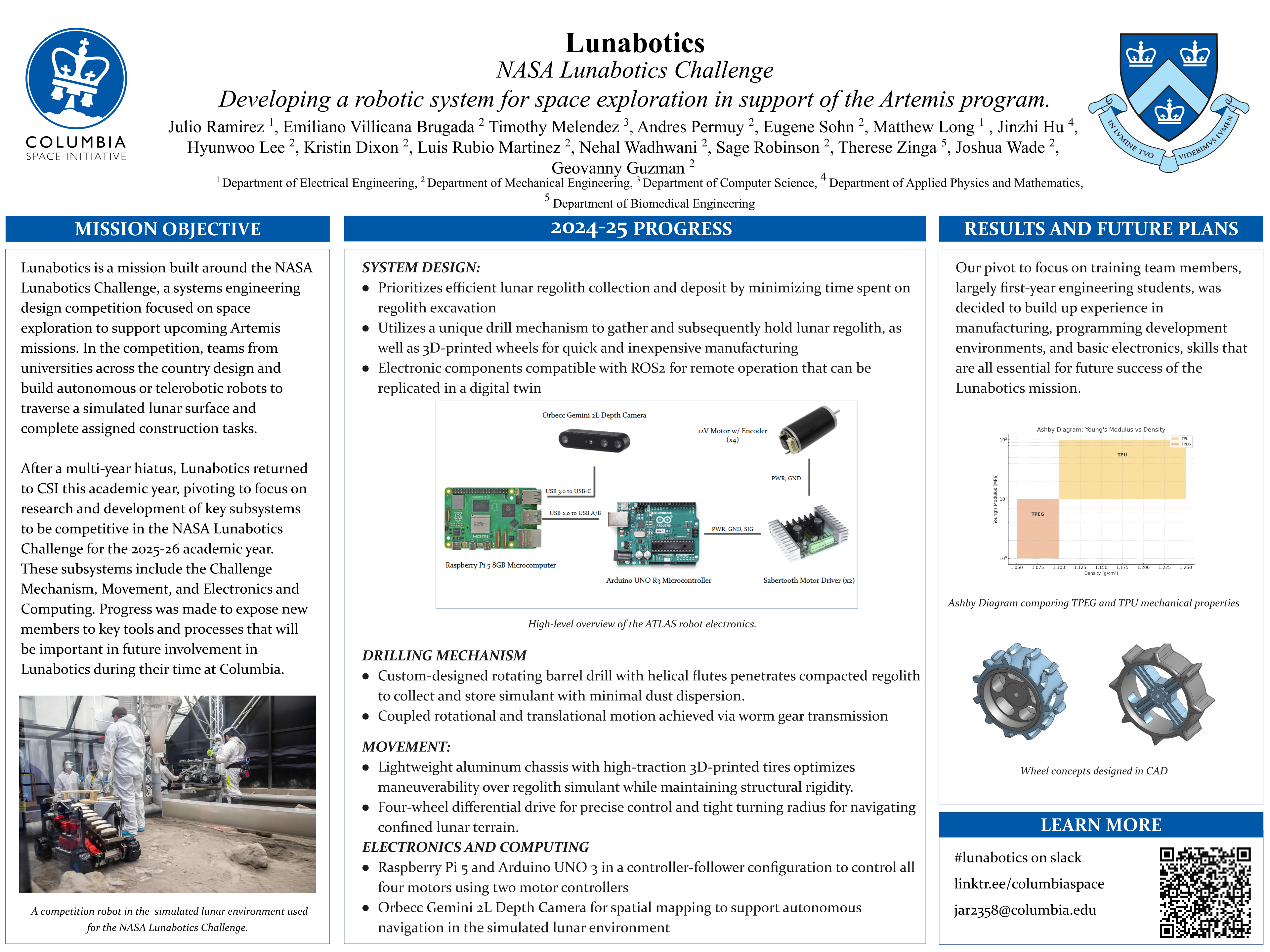
As co-lead and lead mechanical engineer, I relaunched Columbia's Lunabotics program from nothing: recruiting a multidisciplinary team of undergrads and grad students, rebuilding the operational structure, and re-establishing faculty sponsorship. I owned the mechanical architecture, CAD modeling, and frame layout, and designed the full chassis for fabrication and modular testing.
I designed a barrel-style core drill driven by twin worm gears that couple translation and rotation while keeping each motion independently controllable, a solution to regolith transport that we didn't have time to fabricate. On the shop floor, I manufactured and assembled a testable chassis with abrasive waterjet cutting and brake forming, and ran early material tests on 3D-printed TPU and aluminum. I also taught underclassmen SolidWorks, manufacturing, ROS2, MATLAB, 3D printing, and mechanics of solids, and managed meetings, timelines, and a $15,000 budget while writing reports and proposals against NASA's systems engineering process.
We revived Columbia's Lunabotics presence and built a team that should outlast any single year: a fabricated test chassis, two wheel prototypes, a complete core-drill design, an autonomy framework running on ROS2 and RViz2, and a group of new members trained in mechanical design, programming, and systems integration.
The harder parts were less technical. Balancing design ambition against a realistic fabrication timeline took constant negotiation, and so did building team culture and shared knowledge from scratch after the hiatus, all while onboarding new members and coordinating across subsystems.
I'm proud of the pivot. Laying a solid technical and organizational foundation this year puts Columbia in a position to reenter the competition field with a mature, trained team ready to compete in future Lunabotics challenges.